Venture Capital Outsourcing has turned out to be a sensible solution to the rapid changes in the venture ecosystem. Today, venture capital companies assess a larger number of deals, control extensive portfolios, and undertake operations in different regions. All this is done while dealing with the pressure of shorter capital cycles and higher expectations of limited partners (LPs). Meanwhile, the establishment of large internal teams is not only expensive but also lacks flexibility most of the time. According to the 2024 report of PwC and Deloitte, a considerable proportion of venture capital funds are reforming their operational models with the aim of keeping the same size and not losing analytical depth. Venture Capital Outsourcing gives firms the opportunity to use specialized research, financial expertise, and operational support whenever they need them. Instead of stretching small internal teams too thin, Venture Capital outsourcing enables partners to concentrate on sourcing, deciding, and building relationships with founders. In an environment where timing and judgment are the two factors that determine the amount of profit made. This change has become a strategic necessity rather than an option.
Venture Capital Outsourcing and the Changing VC Operating Model
It is altering the way in which venture firms are planning the structure of their teams as well as their workflows. It is not the case that funds will be enlarging their permanent headcount. They are going to be using the flexible operating models that will be scalable according to deal activity.

Venture Capital Outsourcing and the Changing VC Operating Model
Growing Complexity in Venture Capital Operations
The modern venture portfolios are more complex than ever before. Funds are investing in a variety of sectors, at different stages, and in different geographical areas. The 2024 data of Deloitte Private Markets shows that mid-sized venture firms now have a much larger number of portfolio companies than they did ten years ago. Venture Capital Outsourcing is one of the means through which this complexity is manage. As it provides additional analytic and operational capacity without the need of hiring more internally.
Cost Flexibility Without Strategic Dilution
The addition of analysts and operational personnel to the workforce constitutes a fixed cost that tends to persist during times of recession. Conversely, Outsourcing turns these costs into variable ones. This enable the firms to adjust their support for the operation according to their needs. This method is like the operating models of private equity, where cost control and flexibility are very important.
Speed as a Competitive Advantage
With enhanced speed, VCs can support more startups earlier in the lifetime of the business and provide the founders with quicker feedback that builds confidence in their relationship with the venture capital firm. The combination of this fast turnaround time and good internal decision-making provides a strong credibility and trust factor with the startup community It enhances the benefits even further. Enhanced speed is therefore more than just an operational benefit. It can be leveraged as a key competitive advantage. This results in improved access to high-quality opportunities, superior deals, and the highest win percentage, even in oversubscribed investment situations.
Using an outsourced team allows you to greatly accelerate the critical components required to complete those processes, including conducting Deal Screening, Market Studies, and Comparable Benchmarking, to name a few. The ability to streamline these functions and utilize standardized approaches, advanced tools, and dedicated analysts enables your firm to more effectively evaluate deals, reducing time to market and increasing confidence.
Venture Capital Outsourcing in Research, Due Diligence, and Deal Support
By providing immediate access to the investment lifecycle, vendor-researched funds provide immediate value through in-depth research and consistent delivery of results.
Market Research and Sector Mapping
Research teams are responsible for evaluating multiple industries, keeping track of technological advancements, market adoption by consumers, and competition. Thematic investing is becoming a leading performance driver for venture investment portfolios. Market data on thematic investing is being published by CBRE and MSCI for the year 2024. While VC firms lack the resources to continuously monitor market trends internally. Venture Capital outsourcing enables VC firms to perform ongoing market due diligence through comprehensive evaluations of reports from independent firms.
Financial and Commercial Due Diligence
As the valuation landscape normalizes, VC firms are now giving greater importance to fundamentals when reviewing transactions. External analyst professionals are assisting VC firms with revenue modeling, evaluating unit economics, and creating downside scenarios. These processes utilize an investment banking discipline, yet provide the flexibility required to manage the high degree of uncertainty associated with early-stage investments.
Financial Modeling and Investment Materials
There is a difference between venture models and cash flow frameworks; however, the need for structured analysis remains. Outsourcing takes care of runway analysis, milestone-based valuation logic, and sensitivity testing. All of which are of the same rigor as real estate financial modeling geared for startup dynamics. The teams working off-site also aid in the preparation of investment memos and materials for the committee. This in turn lightens the internal workload.
Venture Capital Outsourcing for Portfolio Management and Fund Operations
In addition to deal execution, Venture Capital Outsourcing is becoming more of a part of the process of investment monitoring and fund operations. As venture portfolios grow and become more complex, internal teams often struggle to maintain consistent oversight without additional support.

Venture Capital Outsourcing for Portfolio Management and Fund Operations
Portfolio Monitoring and Performance Analysis
McKinsey’s 2025 Global Private Markets Review claims that firms that monitor their portfolios via analytics-driven monitoring frameworks can achieve almost 25% greater follow-on capital allocation efficiency compared to firms that typically rely on periodic manual reviews of their portfolios. Furthermore, the study indicates that by having the ability to monitor the performance of their portfolio in real-time. Investors can quickly identify underperforming assets before they have an opportunity to erode the value of their portfolios.
Investor Reporting and Transparency
According to a PwC Private Capital survey in 2024, over 70% of limited partners consider the quality and transparency of reports to be the main reason for their reinvestment. On the contrary, venture funds using outsourced reporting and analytics support are able to fulfill LP timelines and reporting standards. This is especially true when the complexity of the portfolio increases.
Compliance and Operational Support
Deloitte’s 2024 alternative investment operations study revealed that funds that availed themselves of outsourced compliance and fund operations support were able to report regulatory less delays of up to 30%. In addition, they were also able to maintain good terms with the regulators in different jurisdictions. The study also demonstrates that control outsourcing not only eliminates the burden on internal resources but also draws the line where governance is concerned.
How Magistral Consulting Increases Value through Venture Capital Outsourcing?
Magistral Consulting increases the value of Venture Capital Outsourcing. By making its research, analysis, and operational support match the ways in which the venture firms make their investment decisions. By positioning itself so closely to the internal procedures, Magistral can be sure that insights are not only timely and relevant but also directly connected to the execution of the deal.
The support is given in the areas of research, diligence, portfolio monitoring, and investor reporting. These are all adjusted according to the fund’s strategy and stage. Such an approach permits the venture teams to take on more work without adding staff, develop the process of decision making and the communication with the limited partners to be one of an ongoing nature. Thus transforming the Venture Capital Outsourcing into a competitive advantage is sustained over time rather than just a temporary solution.
About Magistral Consulting
Magistral Consulting has helped multiple funds and companies in outsourcing operations activities. It has service offerings for Private Equity, Venture Capital, Family Offices, Investment Banks, Asset Managers, Hedge Funds, Financial Consultants, Real Estate, REITs, RE funds, Corporates, and Portfolio companies. Its functional expertise is around Deal origination, Deal Execution, Due Diligence, Financial Modelling, Portfolio Management, and Equity Research
For setting up an appointment with a Magistral representative visit www.magistralconsulting.com/contact
About the Author
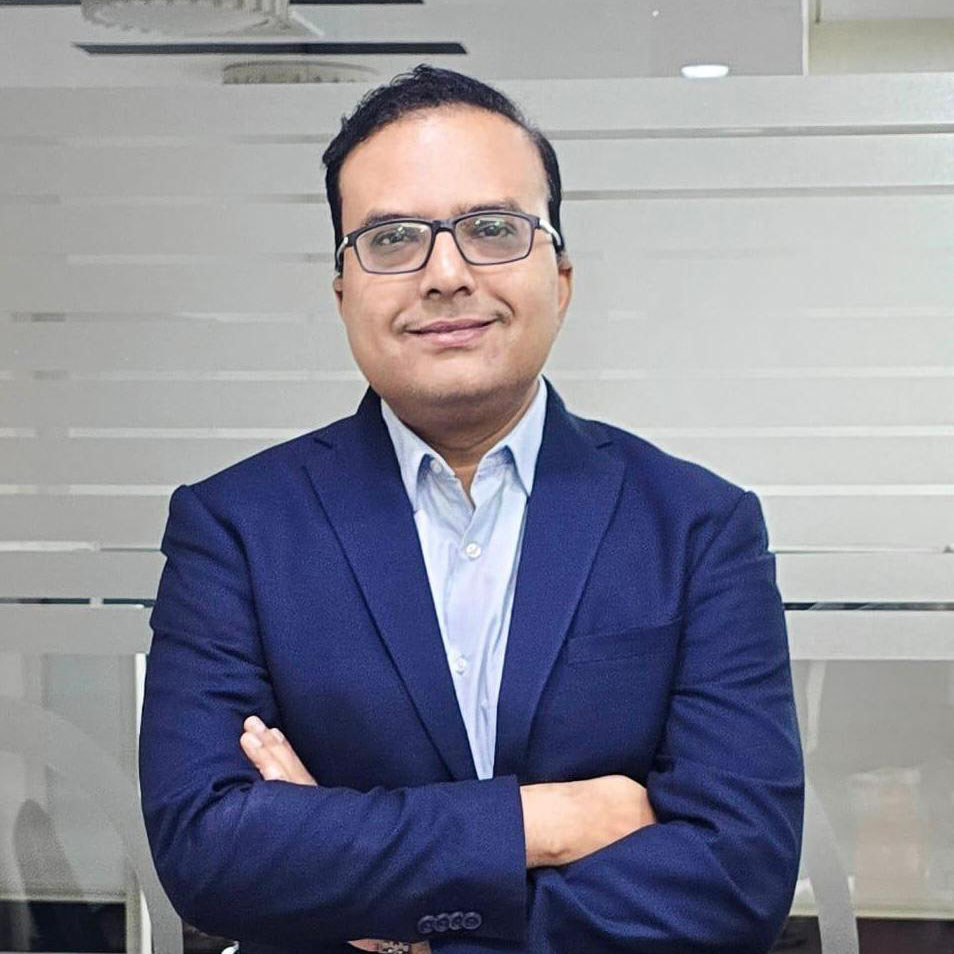
Prabhash Choudhary is the CEO of Magistral Consulting. He is a Stanford Seed alumnus and mechanical engineer with 20 + years’ leadership at Fortune 500 firms- Accenture Strategy, Deloitte, News Corp, and S&P Global. At Magistral Consulting, he directs global operations and has delivered over $3.5 billion in client impact across finance, research, analytics, and outsourcing. His expertise spans management consulting, investment and strategic research, and operational excellence for 1,200 + clients worldwide
FAQs
What activities are typically included in Venture Capital Outsourcing?
Is Venture Capital Outsourcing suitable for smaller venture funds?
Does Venture Capital Outsourcing reduce control over investments?
How does Outsourcing support limited partner expectations?

