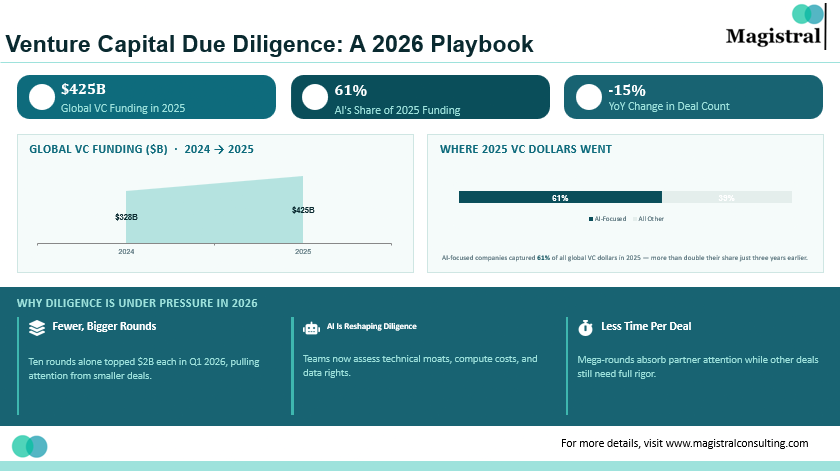
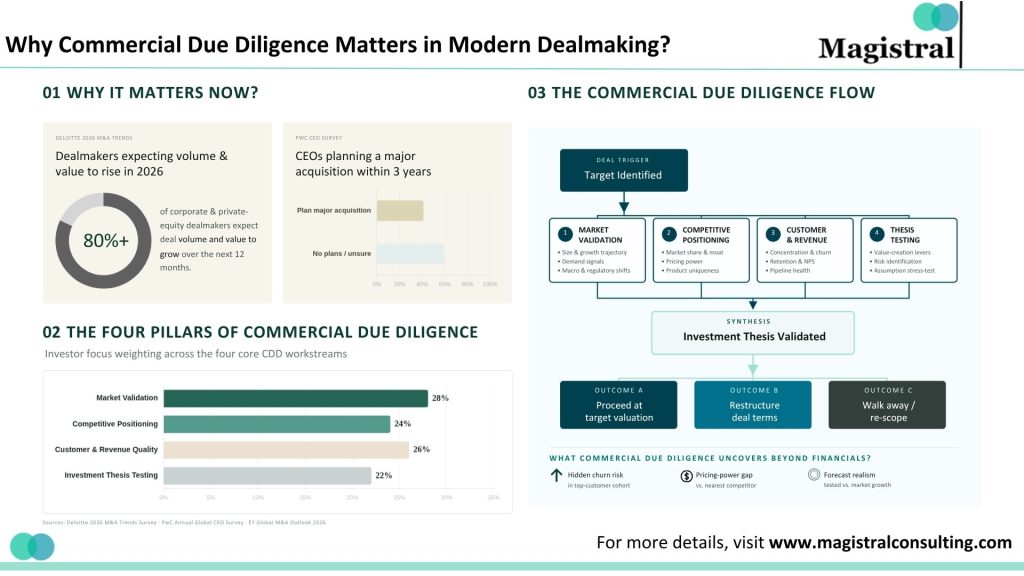
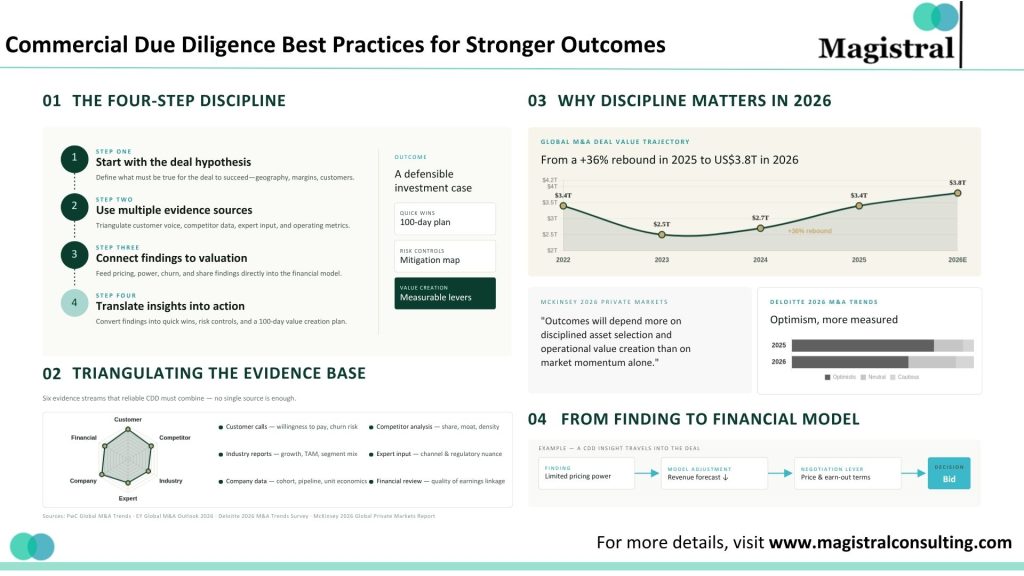
Property investing can look straightforward from a distance. A buyer studies the location, checks the rent, estimates the yield, and decides whether the price feels reasonable. In practice, every building carries layers of financial, legal, operational, environmental, and market risk that may not appear in the headline numbers. Real estate due diligence brings those layers into view before capital is committed. Its importance has grown as global property transactions recover from a difficult interest rate cycle. JLL reported that global direct real estate investment reached about USD 703 billion in 2024, up 14 percent from the previous year, and then rose to USD 185 billion in the first quarter of 2025, up 34 percent year on year.
With more capital coming into the market, verification needs to be systematic to help investors separate good investments from those whose returns have been based on rosy expectations.
Market Drivers Shaping Real Estate Due Diligence in 2025
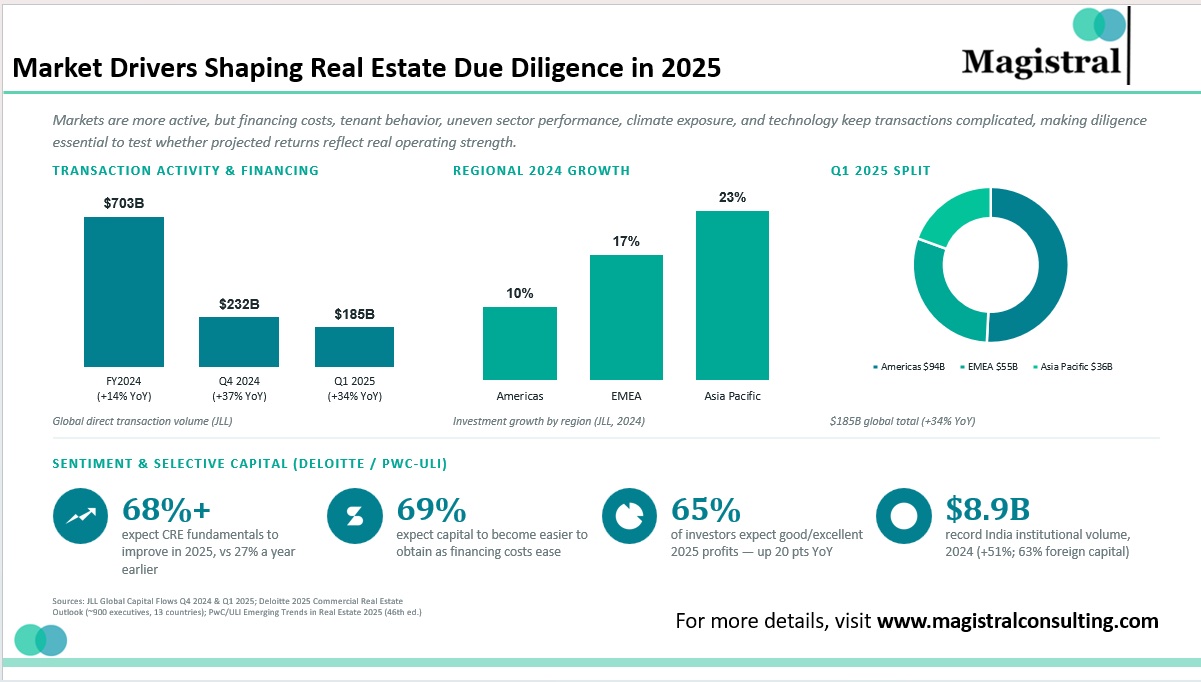
The real estate markets are picking up pace, although high financing costs, altered tenant behavior, poor sector performance, exposure to climate change, and technology use remain issues that will make real estate due diligence necessary to determine if projected returns are indeed based on actual performance or just rosy expectations.
Market Drivers Shaping Real Estate Due Diligence in 2025
Transaction Activity and Financing
Global transaction activity in Q4 2024 amounted to USD 232 billion, up 37% year on year, with annual investment volume growing to USD 703 billion, up 14%. For Q1 2025, the global volume of activity was USD 185 billion, up 34%, with cross-border investments up 57%. Deloitte’s 2025 outlook found that 68%+ of respondents expected CRE fundamentals to improve, versus 27% previously; around 68% expected financing to become less expensive and 69% expected capital to become easier to obtain. The survey covered nearly 900 global real estate executives and direct reports across 13 countries. While the mood may be more positive, diligence must test interest rates, refinancing margins, DSCR, LTV, amortization, covenants, and maturities.
Selective Capital and Sector Trends
The results from PwC and the Urban Land Institute showed that 65% of investors expected their firm to see profits in 2025 as good or excellent; that was 20 points more than in the previous year. It was mentioned in their 46th annual Emerging Trends in Real Estate edition with 1,500+ surveys and 500+ interviews. Investors are looking for sectors with structural support like industrial, logistics, living, data centers, and some alternatives. However, sector narratives that sound good require an investigation of the supply, tenants’ quality, infrastructure, and competitiveness.
Regional Differences
The local approach is important. According to JLL, the 2024 investment growth was estimated at 10%, 17%, and 23% in the Americas, EMEA, and Asia Pacific, respectively. As for the first quarter of 2025, the volume of transactions made in the amount of USD 185 billion comprised USD 94 billion in the Americas, USD 55 billion in EMEA, and USD 36 billion in Asia Pacific. The total transaction value in India reached the historical high of USD 8.9 billion in 78 institutional deals, which means 51% growth compared to 2023, with the participation of foreign institutional investors at 63%.
Core Financial and Operational Tests in Real Estate Due Diligence
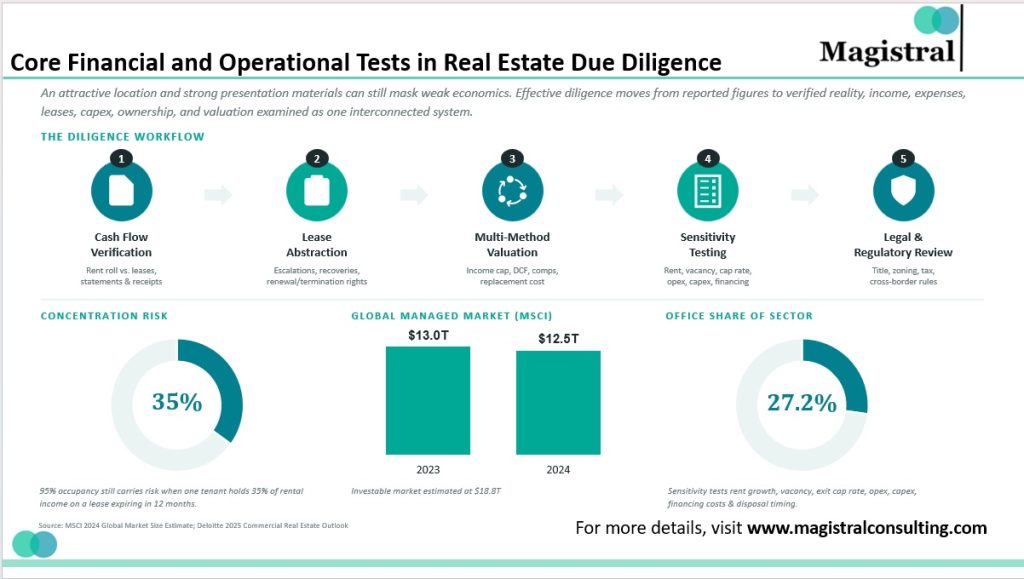
A real estate project can have good location attributes and appealing presentation material while being poor economically. Consequently, in-depth real estate due diligence starts from looking beyond accounting numbers and analyzing the economics of the property through income, expenses, leasing structure, financing needs, ownership, and valuation issues together.
Core Financial and Operational Tests in Real Estate Due Diligence
Cash Flow and Operating Expenses
Rent rolls should be cross-checked against lease agreements, financial statements, banking records, and management reports to analyze the tenant composition, lease expirations, rent escalations, concessions, vacancy rates, and collection efficiency. For instance, the risk associated with a property having 95% occupancy is high if one tenant contributes 35% of total rentals and the lease expires in 12 months. Operating expenses such as taxes, insurances, maintenance expenses, utility charges, management fees, repairs, and capex should be reviewed. Insurances related to weather conditions are a growing concern.
Lease and Valuation Analysis
Considerations including escalation clauses, rights of renewal and termination, rent holidays, recoveries, assignment, and repairs affect the future cash flows directly. The lease abstraction can be used to standardize these considerations in large portfolios. The appraisal will consider income capitalization, discounted cash flow (DCF), comparable sales, replacement cost, and market valuation rather than relying on a single consideration. As per the information provided by MSCI, the size of the professionally managed global real estate market is valued at $12.5 trillion in 2024 compared to $13.0 trillion in 2023. The size of the global investable market was estimated at $18.8 trillion; offices accounted for 27.2% of the global professionally managed market.
Sensitivity, Legal, and Regulatory Review
Any sensitivity analysis must consider rent growth, vacancy rates, exit cap rates, operating expenses, capex, financing costs, and disposal date to identify assumptions that might make a difference to the outcome. The legal and regulatory real estate due diligence review process should cover title, liens, easements, zoning, restrictions, taxes, transaction costs, and redevelopment rights. In cross-border transactions, real estate due diligence should also account for foreign investment restrictions, structure, tax, and reporting requirements.
How AI Changes Real Estate Due Diligence
A normal transaction includes leases, environmental and engineering studies, operational statements, loan documents, title documents, marketing research, and communications. Manual review of these documents is a labor-intensive process that often results in inconsistency during real estate due diligence.
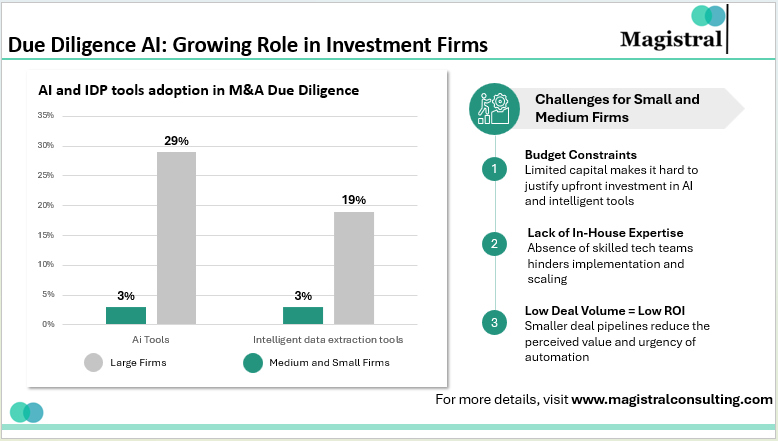
AI may be helpful for classifying documents, extracting information from leases, detecting anomalies, extracting information, and comparing documents within the large set of documents. However, it must complement professional assessment rather than replace it.
According to Deloitte, only 24% of commercial real estate industry participants had completed AI implementation, while 76% were still at the stage of testing, piloting, and experimenting with AI solutions. However, 97% of the participants stated their commitment to AI solutions, and 81% mentioned that their investments will be directed into the technology and data field.
Data Quality Determines Whether Automation Helps
Data regarding the property is scattered across spreadsheets, accounting programs, leases, property management software, data rooms, and emails. In case of inconsistent data in the sources, the automated process may provide wrong results more quickly.
According to Deloitte, only 14% of the participants in their survey felt that their company had a good data collection and management process with a strong privacy policy. The issue is especially acute for real estate due diligence, where inconsistencies in data lead to misinterpretations of rent roll, lease abstract, valuation, and risk dashboard.
It is therefore essential to include data normalization into the due diligence process. The tenant name, lease date, areas, expenses, property IDs, and comparable data should have consistent meanings before analysis.
Digital Tools Strengthen Scenario Analysis
Technology is also enabling enhancements in property scenario analysis. Geo-spatial data enables analysis of locations using flood maps, transportation, demographics, competitive supplies, and access to infrastructure. Digital building data can enable estimation of energy consumption and capital requirements, whereas portfolio analyses can compare tenant mix, lease expiration dates, and geographies.
Such data points are critical for data centers, as infrastructure capacity and power availability can define the feasibility of the project. In 2025, Deloitte predicted that the expansion of AI infrastructure in India would need 45-50 million sq feet of extra real estate space and 40-45 TWh of incremental power by 2030. Thus, due diligence should consider not only traditional criteria but also power, cooling, fiber capacity, land availability, and permits.
Human Judgment Still Determines Materiality
Artificial intelligence may identify an odd lease agreement or increased expenses, but the materiality of such events is still determined by humans. For instance, an increased cost might indicate a number of factors, including inflation, deferred maintenance, one-off repairs, or deteriorating structural condition.
The best method to use involves technology with human knowledge and experience, automating repetitive tasks while focusing the professionals on deviations, discrepancies, and situations that may influence pricing, deal structuring, and financing.
How Magistral Supports Real Estate Due Diligence
Magistral is a full-service real estate due diligence provider that offers property, financial, legal, market, and operational diligence. Magistral assists its clients in conducting rent rolls and lease analysis, property-level financial modeling, valuation and cash flow analysis, market and comparable property research, tenants and lease analysis, title and documents review, debt and financing analysis, zoning and regulatory compliance check, and the preparation of investment memos. This end-to-end real estate due diligence support helps investors validate assumptions, identify risk, and move toward investment decisions with stronger evidence.
About Magistral Consulting
Magistral Consulting has helped multiple funds and companies in outsourcing operations activities. It has service offerings for Private Equity, Venture Capital, Family Offices, Investment Banks, Asset Managers, Hedge Funds, Financial Consultants, Real Estate, REITs, RE funds, Corporates, and Portfolio companies. Its functional expertise is around Deal origination, Deal Execution, Due Diligence, Financial Modelling, Portfolio Management, and Equity Research
For setting up an appointment with a Magistral representative visit www.magistralconsulting.com/contact
About the Author

Prabhash Choudhary is the CEO of Magistral Consulting. He is a Stanford Seed alumnus and mechanical engineer with 20 + years’ leadership at Fortune 500 firms- Accenture Strategy, Deloitte, News Corp, and S&P Global. At Magistral Consulting, he directs global operations and has delivered over $3.5 billion in client impact across finance, research, analytics, and outsourcing. His expertise spans management consulting, investment and strategic research, and operational excellence for 1,200 + clients worldwide
FAQs
What does property due diligence normally include?
Why is the rent roll important during a property review?
How does climate risk affect property valuation?
Can artificial intelligence replace analysts in property diligence?
How can investors make the diligence process more efficient?