Tag Archives: Deal origination for Private Equity

Private equity firms are now operating in an environment where size, speed, and compliance are essential for success. As private equity funds continue to grow and their investors continue to come from all over the world, operational issues have become much more challenging. The reporting cycles continue to become shorter, the need for transparency in data continues to increase, and the need for compliance continues to grow. In this environment, private equity fund administration outsourcing has moved from a cost-saving exercise to a way of doing business. The latest reports from PwC and Deloitte indicate that fund managers currently devote a substantial amount of their internal resources to non-investment activities such as accounting, investor reporting, and regulatory filings. By outsourcing these functions, managers can devote more time to deal sourcing, enhancing the value of their portfolio, and developing relationships with investors. Most importantly, outsourcing brings in high-quality processes and technology that would otherwise require substantial investment.
As limited partners expect accuracy, speed, and transparency, outsourcing provides a practical solution to meet these needs without losing focus.

Private Equity Fund Administration Outsourcing and the Evolving Operating Model

This trend toward outsourcing is evident in the rapid growth of the fund administration outsourcing market. The global market size reached USD 12.4 billion in 2024 and is expected to grow at a rate of 8.1% annually until 2033, potentially hitting USD 24.2 billion. North America remains the largest market, around USD 5.1 billion, thanks to an established private equity environment and increased regulatory scrutiny. Europe follows with USD 3.6 billion, helped by cross-border fund setups and frameworks like AIFMD. The Asia/Pacific area is the fastest-growing market, reflecting an increase in alternative investments and cross-border capital flows. Private equity fund administration outsourcing is indicative of a broader trend in the way fund managers organize their businesses. Rather than maintaining large in-house staffs, firms are increasingly turning to partners to manage necessary administrative functions while their staffs concentrate on higher-level work. Recently, the global private equity industry surpassed several trillion dollars in assets under management, according to MSCI and Preqin. As this has expanded, the amount of capital calls, distributions, valuations, and investor communications has grown dramatically. Many general partners find that traditional in-house teams are struggling to keep up.

Private Equity Fund Administration Outsourcing and the Evolving Operating Model

Private Equity Fund Administration Outsourcing and the Evolving Operating Model

Rising Complexity in Fund Structures

Modern funds employ multi-tier structures, co-investment funds, and parallel funds in various regions. Each of these fund structures has its own set of accounting requirements. Private equity fund administration outsourcing assists in making these processes more standardized by employing experienced personnel to handle similar structures. This increases the efficiency of operations and makes them more audit ready.

Investor Expectations and Transparency

Limited partners require almost real-time reporting on the performance of funds. Quarterly reporting is no longer adequate. According to Deloitte’s 2024 alternative investment survey, institutional investors consider transparency and data quality to be among their top evaluation points. The outsourced administrators are likely to provide secure portals and reporting formats that address these requirements effectively.

Cost Flexibility and Scalability

Establishing an in-house administration team involves fixed costs of employment and training. Outsourcing involves a shift from fixed to variable costs that scale with the size of the funds. This flexibility is especially important for new managers and mid-market firms seeking high-quality operations without the substantial overhead. Many firms already apply this approach when engaging external partners for private equity-related operational support, forming a consistent outsourcing-driven ecosystem.

Private Equity Fund Administration Outsourcing and Regulatory Compliance Pressure

The pressure of regulations has increased in the global private equity market. The government has now begun demanding complete disclosure, strict deadlines, and accurate record-keeping. Private equity fund administration outsourcing is a major area that helps companies overcome such problems with confidence. In the last few years, there has been an increase in reporting obligations from regulators in North America and Europe regarding investor protection, valuation, and fees. According to PwC, failure to comply with these regulations can result in financial consequences, such as penalties, and damage to reputation, which affects future fundraising activities.

Standardized Reporting and Controls

Outsourced administrators work according to internal controls, procedures, and compliance checklists. These frameworks help ensure that financial statements, capital account reports, and regulatory filings follow consistent standards. Maintaining this level of rigor internally often requires considerable investment.

Audit Readiness and Data Integrity

The audit process is one of the most resource-intensive steps for fund operations teams. Outsourcing makes this process easier by maintaining clean and well-documented records throughout the year. Experienced administrators who know how to work with global audit firms reduce friction and cycle times for audits. This reliability also supports subsequent activities like capital raising, where historical accuracy builds investor trust.

Cross-Border Regulatory Knowledge

As funds expand globally, compliance requirements differ by jurisdiction. Outsourced providers have regional expertise and keep track of regulatory updates across markets. This reduces the burden on internal teams and lowers the risk of non-compliance. Similar benefits can be seen when firms outsource other complex functions, such as managing multi-jurisdictional fund structures.

Private Equity Fund Administration Outsourcing and Technology Enablement

Technology has become essential for effective fund administration. Private equity fund administration outsourcing usually provides access to systems that individual firms may find costly or too time-consuming to implement on their own. Research from Precedence suggests that the adoption of automation and cloud-based fund accounting systems has significantly increased between 2023 and 2025. Administrators have led this shift, incorporating technology into everyday workflows.

Automation in Accounting and Reporting

Automated reconciliation, calculation engines, and reporting templates minimize manual work and lower error rates. This improves both speed and accuracy, particularly during quarter-end and year-end closings. For fund managers, this results in more accurate reporting cycles and fewer last-minute adjustments.

Data Security and Access Control

With such critical investor and portfolio information at stake, security is a significant concern. Top administrators spend significantly on security, access, and disaster recovery plans. These plans often go beyond what smaller organizations can afford on their own, providing an additional layer of security

Integration with Investment and Portfolio Systems

Modern administration systems are integrated with portfolio monitoring and valuation systems, thus offering a single source. Such integration is ideal for improved decision-making and aligns well with the rising trend of AI analytics in the financial sector.

Private Equity Fund Administration Outsourcing as a Strategic Advantage

Studies indicate that more than 70% of investment firms outsource back-office operations to cut costs, improve client experience, and boost efficiency. According to reports, 68% of fund managers believe that outsourcing is a crucial strategy to counter risks and optimize processes. Outsourcing is inextricably linked with scalability and best-in-class operations in the current investment environment. Besides improving efficiency and compliance, private equity fund administration outsourcing is slowly becoming an integral part of competitive advantage. Well-oiled and transparent operations will always provide a competitive advantage in terms of attracting capital and closing deals with confidence. A survey indicated that limited partners prefer to invest in managers who exhibit institutional-quality operations, irrespective of the size of the fund. Private equity fund administration outsourcing enables smaller and mid-sized firms to compete on an equal footing with their larger rivals.

Private Equity Fund Administration Outsourcing as a Strategic Advantage

Private Equity Fund Administration Outsourcing as a Strategic Advantage

Focus on Core Investment Activities

By reducing administrative complexities, partners and investment teams can focus more on sourcing, due diligence, and monitoring. This will directly impact performance outcomes, which are of prime importance to investors.

Support Across the Fund Lifecycle

Right from the inception of the fund to its closure, administrators ensure continuity. This is especially important during periods of change, such as the launch of new funds or changes in organizational structures. Most companies take this outsourcing concept further to other related functions, such as venture capital administration and investment banking, to ensure a smooth operating environment.

Scalability Without Fixed Cost Expansion

Private equity fund administration outsourcing helps companies manage growth in operations in sync with the growth in assets under management and fund complexity without adding to their fixed costs. Such flexibility is especially important during fundraising campaigns and when the portfolio is growing very quickly.

Improved Data Transparency for LP Engagement

Professional administrators provide data in a standardized, timely, and audit-compliant manner, which helps to increase data transparency for limited partners. Better data quality and consistency help to build limited partner trust and facilitate easier fundraising for future funds.

Magistral’s Services for Private Equity Fund Administration Outsourcing

Magistral offers comprehensive end-to-end Private Equity Fund Administration Outsourcing solutions, right from setting up a PE fund to closing it. The services include fund accounting and bookkeeping, capital call and distribution administration, investor reporting, NAV calculation, waterfall analysis, carried interest computation, preparation of financial statements, and coordination with auditors and tax advisors. Magistral can also assist in portfolio reporting, cash flow monitoring, compliance, and regulatory reporting, as well as data management, thereby extending the internal finance and operations team of the fund while also providing scalability and cost savings.

About Magistral Consulting

Magistral Consulting has helped multiple funds and companies in outsourcing operations activities. It has service offerings for Private Equity, Venture Capital, Family Offices, Investment Banks, Asset Managers, Hedge Funds, Financial Consultants, Real Estate, REITs, RE funds, Corporates, and Portfolio companies. Its functional expertise is around Deal origination, Deal Execution, Due Diligence, Financial Modelling, Portfolio Management, and Equity Research

For setting up an appointment with a Magistral representative visit www.magistralconsulting.com/contact

About the Author

Nitin is a Partner and Co-Founder at Magistral Consulting. He is a Stanford Seed MBA (Marketing) and electronics engineer with 19 + years at S&P Global and Evalueserve, leading research, analytics, and inside‑sales teams. An investment‑ and financial‑research specialist, he has delivered due‑diligence, fund‑administration, and market‑entry projects for clients worldwide. He now shapes Magistral Consulting’s strategic direction, oversees global operations, and drives business‑development support.

FAQs

What is Private Equity Fund Administration Outsourcing?

It refers to delegating fund accounting, investor reporting, and regulatory support to specialized third-party providers so internal teams can focus on investment decisions.

Why do limited partners prefer outsourced administration?

Outsourced models offer standardized reporting, stronger controls, and greater transparency, which improve trust and reduce operational risk.

Does outsourcing reduce control for fund managers?

No. Managers retain oversight while benefiting from professional execution and technology-driven processes.

Is outsourcing suitable for emerging managers?

Yes. It allows smaller firms to operate with institutional quality systems without heavy fixed costs.

How does outsourcing support future scalability?

As assets grow, outsourced platforms scale seamlessly, avoiding repeated internal restructuring.


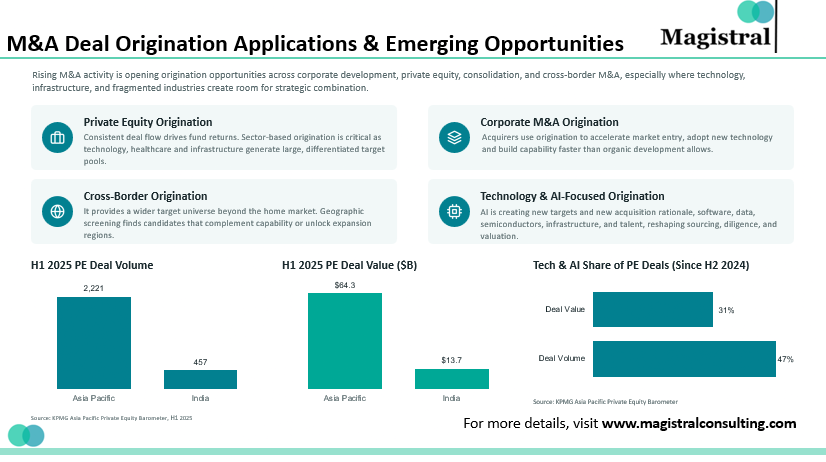
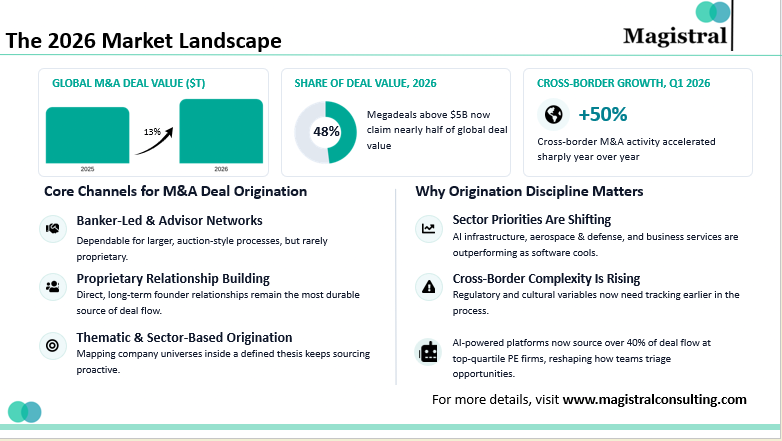
It has never been more difficult to find quality deals or to identify more proprietary opportunities for which to compete. In this increasingly competitive landscape, deal origination outsourcing has shifted from proof-of-concept to a mainstream strategic approach. It is for both funds and corporate investors alike. By leveraging non-core processes within the sourcing machine, managers can access more extensive networks. They can also research and apply technology-driven processes with limited growth in fixed costs. In line with a PwC and a Deloitte outlook, a growing trend for alternative asset managers now involves turning to experts. It is to support sourcing, screening, and early-stage diligence work in a world where cycles are rapidly shortening. investor demands also continue to escalate. Rather than undermining direct institutional judgment, a deal origination outsourcing approach enhances it.

It is, in essence, expanding your origination platform globally and across industries. It is with direct institutional judgment focused on conviction and decision-making.

Deal Origination Outsourcing: Response to Market Complexity

Investment managers now face a growing volume of deal opportunities alongside heavier internal processing demands. It prompts them to adopt tools such as deal origination outsourcing. The global middle-office outsourcing market reached USD 8.5 billion in 2024 and is projected to grow to USD 16.9 billion by 2033. The CAGR is 7.47% between 2025 and 2033. Firms are driving this growth through stricter reporting requirements and greater transparency expectations. There is also rising investment complexity, and increased reliance on technology-led compliance management. In essence, the key role of deal origination outsourcing is that it assists companies in creating a systematic approach for deal sourcing. All the while maintaining its adaptability. This is because third parties are responsible for market mapping, entity identification, and outreach. This allows for the development of the funnel as well.

Deal Origination Outsourcing: Response to Market Complexity

Deal Origination Outsourcing: Response to Market Complexity

Expanding coverage without expanding headcount

The first benefit with possibly the widest-reaching implications starts with scalable coverage. Sourced origination teams can monitor hundreds of companies at the same time, which is an increasingly valuable skill. As private equity firms increasingly allocate capital across growth equity investments, buyouts, and special situations. It can be tough for private equity giants to retain consistent origination coverage outside their circles of influence. Sourced origination allows for market insights without the burden of sunk costs for physical offices.
This strategy is already mainstream. In the North America market, 47% of mid-market PE & VC organizations reported an increase in the use of third-party service providers. While 44% reported that usage levels have remained the same. Just 9% reported a decrease, which is a positive trend that is either stable or accelerating.

Data-driven sourcing in a crowded landscape

Deal origination outsourcing is rapidly integrating the use of human intelligence and the power of data and analytics. This is done by service providers who utilize industry-specific databases and transaction intelligence. It also uses AI-driven screening tools to identify and prioritize target companies earlier than before. According to a study conducted by Deloitte in 2024,  “Funds that adopted a data-driven sourcing approach achieved a shorter time to first meeting compared to a relationship-driven approach.”
>Such capabilities fit with the wider transformation currents in the middle office. The tech used is not only for efficiency but to support investment decision-making and governance.

Reducing opportunity cost for senior investors

Each hour spent by senior partners in list building, data cleaning, or canvassing cold leads is time taken away from valuation, negotiation, or interacting with the LPs. In doing away with repetitive and process-driven sourcing work, deal origination outsourcing helps senior investors in leveraging opportunities in which their know-how possesses compound returns. It is known that venture capital organizations increasingly use outsourced analyst staff. It is for tracking new companies in various ecosystems in preparation for partners to contact only after principal fit is ascertained.

Deal Origination Outsourcing and Its Impact on Investment Efficiency

Outsourcing origination in deals directly impacts how efficiently capital moves from mandate to deployment. Efficiency herein is not merely speed, but quality-adjusted speed.
>According to an analysis of private market transactions, funds that have structured sourcing frameworks appeared to experience fewer instances of late-stage deal dropouts. Outsourcing plays into that role as well, with the process enhancing early filtering and documentation.

Improving deal quality through structured screening

Outsourced teams screen opportunities, using pre-defined investment criteria, before they ever reach the investment committees. This discipline cuts down the noise and keeps them on strategy with the fund. This, in conjunction with internal expertise in valuation and DCF modelling, paints an earlier and clearer picture for the investment teams with minimal rework later in the process.

Supporting thematic and sector-focused strategies

Many funds now pursue themes such as digital infrastructure, healthcare services, or climate-aligned assets. Deal origination outsourcing supports this shift by maintaining continuous sector scans rather than episodic sourcing pushes. For example, infrastructure-focused funds increasingly rely on external partners to monitor regulatory changes and asset pipelines. It is done across regions, feeding insights into capital raising narratives for investors.

Enhancing collaboration across functions

Effective origination requires coordination between sourcing, due diligence, and execution. Sourced teams also tend to integrate with CRM platforms and internal business processes. Its such that analysis results are effectively aggregated to investment banking-style execution teams. The process eliminates friction as well as increases cycle times without sacrificing analysis or due diligence.

Deal Origination Outsourcing: Technology-Led Transformation

Technology has become an integral part of deal origination outsourcing. Firms have moved away from spreadsheets, fragmented databases, and cold calling toward efficient, AI-enabled platforms. This shift mirrors a broader trend across financial services, where the AI in Finance market is expected to grow from USD 38.36 billion in 2024 to USD 190.33 billion by 2030 at a CAGR of 30.6%. AI-centric operating models are driving this change, with more than 80% of financial institutions expected to increase spending on explainable AI (XAI), model governance, and predictive and generative analytics. In deal origination, outsourced service providers play a key role in accelerating this transition. In a forecast by PwC in 2024, over 60% of alternative asset managers intend to enhance spending on technology in sourcing and pipeline management.

This trend aligns with overall management, with the North America region having contributed to a market share of 35.3% of the AI in Finance market in 2024 due to increased acceptance of analytics and automation in private capital markets.

Deal Origination Outsourcing: Technology-Led Transformation

Deal Origination Outsourcing: Technology-Led Transformation

AI-enabled target identification

Advanced AI tools now analyse large volumes of financial data, growth indicators, transaction patterns, and behavioural signals to identify companies most likely to seek capital, pursue strategic partnerships, or explore exits. Compliance automation platforms are currently the fastest-growing AI product segment at a projected 35.7% growth rate, also play a role by ensuring cleaner datasets and reducing regulatory friction during early screening. When combined with human validation, AI-enabled sourcing improves hit rates, shortens origination cycles, and reduces time spent on misaligned opportunities, reinforcing the trend of technology augmenting rather than replacing investment judgment.

Knowledge continuity and institutional memory

One of the least discussed benefits of deal origination outsourcing is related to structured knowledge retention. This is because external teams can keep track of structured data points like contacts, manager interaction, feedback, and timing cues. This enables structured knowledge retention, which in turn benefits from an overwhelming presence of advanced AI, exceeding 91% in the market in 2024, through intelligent data tagging and search.

Integrating origination with downstream processes

Contemporary outsourcing approaches now integrate origination outputs directly with diligence,, valuation, and investment committee processes. This streamlines processes, prevents redundancy, and provides a clean, auditable trail from first touch through investment decision. In a world where private funds find themselves under greater scrutiny from their limited partners, especially about adherence to processes and governance, this is a big boost to both credibility and efficiency.

Deal Origination Outsourcing with Magistral Consulting

As deal origination outsourcing matures, the focus shifts from volume to relevance. Investment teams need partners who understand strategy, not just sourcing mechanics. Magistral Consulting approaches origination as an extension of the investment office, aligning research, analytics, and outreach with each client’s mandate.

By combining sector-focused analysts, technology-driven screening, and seamless integration with diligence and deal support workflows, Magistral helps funds build resilient pipelines. Whether supporting private equity, venture capital, or corporate investors, the emphasis remains on quality first origination that converts into executable opportunities. In a market where attention is scarce and competition intense, deal origination outsourcing becomes most powerful when it feels less like outsourcing and more like collaboration.


About Magistral Consulting

Magistral Consulting has helped multiple funds and companies in outsourcing operations activities. It has service offerings for Private Equity, Venture Capital, Family Offices, Investment Banks, Asset Managers, Hedge Funds, Financial Consultants, Real Estate, REITs, RE funds, Corporates, and Portfolio companies. Its functional expertise is around Deal origination, Deal Execution, Due Diligence, Financial Modelling, Portfolio Management, and Equity Research

For setting up an appointment with a Magistral representative visit www.magistralconsulting.com/contact

About the Author

Prabhash Choudhary is the CEO of Magistral Consulting. He is a Stanford Seed alumnus and mechanical engineer with 20 + years’ leadership at Fortune 500 firms- Accenture Strategy, Deloitte, News Corp, and S&P Global. At Magistral Consulting, he directs global operations and has delivered over $3.5 billion in client impact across finance, research, analytics, and outsourcing. His expertise spans management consulting, investment and strategic research, and operational excellence for 1,200 + clients worldwide

FAQs

What is Deal Origination Outsourcing

Deal Origination Outsourcing refers to engaging external specialists to support sourcing, screening, and early engagement of investment opportunities while internal teams retain decision-making authority.

How does Deal Origination Outsourcing reduce costs?

It converts fixed headcount expenses into flexible engagement models, allowing firms to scale sourcing activity up or down without long-term commitments.

Is Deal Origination Outsourcing suitable for smaller funds?

Yes, emerging managers often benefit the most as outsourcing provides immediate access to research depth and networks that would otherwise take years to build.

Does outsourcing affect relationship-driven sourcing?

When structured well, it complements relationships by ensuring consistent follow-ups and broader market coverage rather than replacing partner-level interactions.

How long does it take to see results from Deal Origination Outsourcing?

Most firms begin seeing qualified opportunities within a few months, though sustained value compounds over time as pipelines and market intelligence deepen.


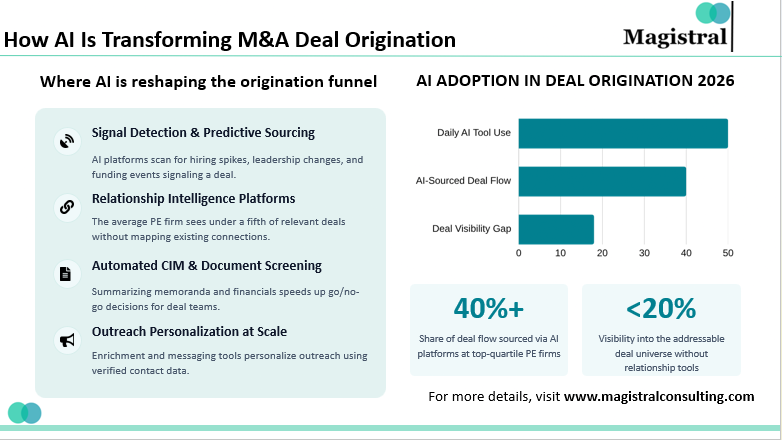
AI-powered deal origination has begun transforming how investment banks, private equity firms, and corporate acquirers identify, analyse, and close high-value transactions. While traditional approaches, which are heavily dependent on interlocked personal networks and on manual efforts, have proven rather sluggish in present-day fast-paced markets, AI platforms allow a strategic advantage to those who use them. Using machine learning and NLP methods, the systems scan huge data sets in real-time to uncover actionable opportunities that would otherwise have gone unnoticed. Hence, firms with AI-powered deal origination not only speed the sourcing but also guarantee the deal pipeline of higher quality and relevance and, thus, maintain competitiveness in the environment that is even more data-driven.

AI-Powered Deal Origination: The New Standard in Sourcing

Advanced analytics are at the centre of the optimizations enabled in sourcing. By automating data collection and analysis, AI can recognize acquisitions candidates, benchmark companies, and determine competitive landscapes in a way never conducted-so swiftly and precisely.

Real-Time Market Intelligence

By ingesting, aggregating, and analysing millions of company profiles, transactions, and financial signals, platforms such as Cyndx Finder and Comparables.ai put forth relevant opportunities within seconds. Their proprietary algorithms are meant to predict which private companies are most likely to seek capital. It can also be used to put on the market for acquisition so the dealmakers can initiate pre-emptive negotiations.

Enhanced Target Identification

The machine learning models assess numerous factors such as sector focus, growth parameters, and funding history. It is to match targets to buyers who are best suited to them. This will minimize human subjectivity and restrict pipeline entries to prospects worth pursuing.

Mapping Competitive Landscapes

The AI-enabled systems provide a piecemeal overview of industry dynamics from which perspective firms gain insight into what their competitors are offering in terms of funding and the pores in the market. Such information will allow deal teams to position themselves advantageously ahead of their competitors to take advantage.

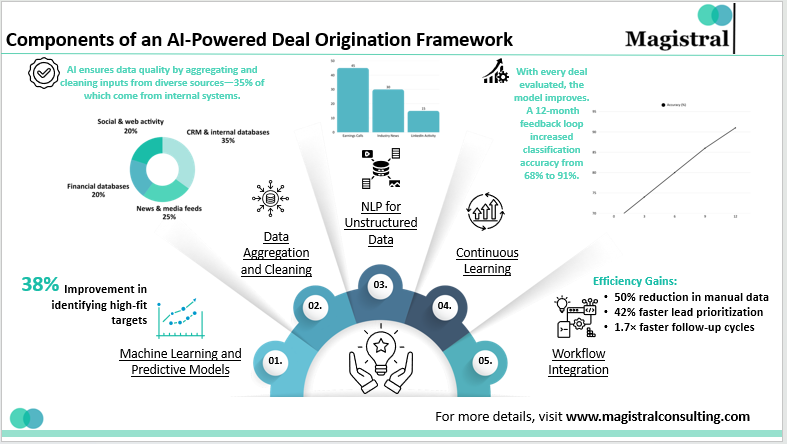
Components of AI-Powered Deal Origination Framework

Different technological layers collaborate to execute a well-designed AI-powered origination process.

Data Aggregation and Cleaning

AI systems need to gather and clean data from multiple sources—including CRM, social media, financial databases and public filings—before they can generate insights.

Machine Learning and Predictive Models

ML algorithms consider the historical performance metrics of investments to identify companies or sectors that may currently be strengthened and would outperform.

NLP for Unstructured Data

Natural Language Processing allow for the analysis of signals of interest from pitch decks, earnings calls, news article reviews, and industry comments.

Workflow Integration

AI tools are linked with internal deal flow systems, CRM technology such as Salesforce or Affinity, as well as calendar and email software to prioritize targets and automatically circulate follow-ups.

Continuous Learning

As the AI is assessed on each new deal or concludes it, the model learns and enriches his predictions for the future that in returns makes the engine smarter.

Components of an AI-Powered Deal Origination Framework

Components of an AI-Powered Deal Origination Framework

Essentially, the smooth functioning of these layers enables a deal origination process powered by AI that is smart and efficient. Through the integration of data aggregation, machine learning, NLP, and workflow automation, deal sourcing becomes more accurate and prioritized by AI.

Proactive Strategies for Superior Outcomes

Today, effective deal origination is moving from reactive, network-driven approaches to proactive, technology-enabled methodologies. Through AI as well as data enriched analytics, firms now can outpace the market (by continuously being on the lookout for similar opportunities).

Predictive Sourcing

AI’s forecasting capabilities enable businesses to predict shifts in the market and identify targets before they are on the public’s radar. This pre-emptive strategy can help engage early and give you better shot at exclusives.

Automated Lead Qualification

With AI, companies can score, and rank leads automatically according to real-time data, industry trends and their own investment preferences. This saves time by concentrating on the best prospects, rather than wasting time on the low-interest ones.

Scalable Outreach and Engagement

With so much of the outreach automated by AI, organisations can now reach out to many people with highly personalised messages much more efficiently. The system also assists in identifying the best time to follow up – making it easier to reach possible sellers.

The present AI technology allows organizations to establish flexible learning capabilities. This enables them to maintain dynamic portfolio alignment. The AI platforms adjust their deal sourcing settings automatically when investment theses transform to maintain pipeline alignment with existing strategic objectives.

AI-Powered Deal Origination: Efficiency, Accuracy, and Competitive Edge

By using deal origination software enabled by AI, you’re not only cutting out inefficiency; you’re also making better investments. Top channels report big increases in research productivity and direct sourcing effectiveness.

Accelerated Research and Screening

The most recent AI tools enable deal teams to perform market and company analysis at a 20 times faster rate than conventional manual approaches. The substantial acceleration in speed enables analysts and decision-makers to shift their focus toward strategic tasks which are more valuable instead of spending time on routine data collection.

Improved Deal Pipeline Quality

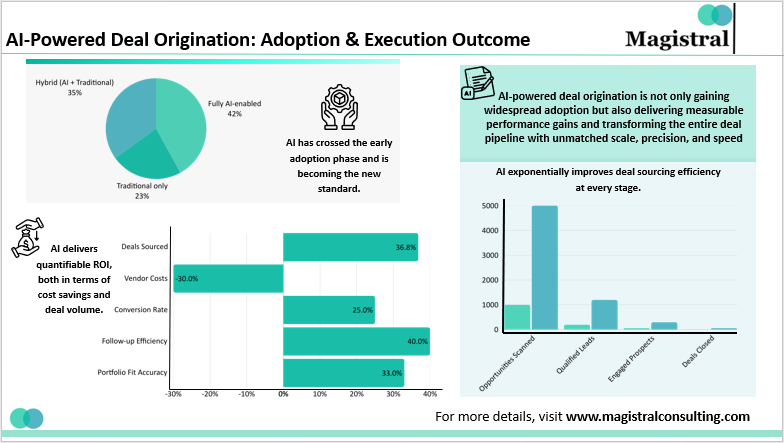
When you tap into richer data and smarter algorithms, companies see a huge boost. About half of their direct sourcing pipelines improve, and they’re sourcing 36% more deals using AI-powered platforms.

Enhanced Decision-Making

Artificial intelligence tools improve investment analysis by offering enhanced visibility for investment opportunities throughout the investment process. The analytics support teams in precise risk evaluation and value discovery which enables better decision-making to enhance deal success rates.  AI analytics give smarter insights during every stage of a deal. This means less risk and a better shot at closing successful deals. Organizations achieve decreased risk levels and improved investment success rates as a result.

AI-Powered Deal Origination: Real-World Applications and Future Trends

The use of AI for deal origination has already produced real-world outcomes for major investment banks alongside private equity firms. The development of this technology will enhance its effect by providing greater self-operating abilities with adaptable personalized deal sourcing capabilities.

Case Studies and Industry Adoption

Leading firms that leverage AI-based platforms have experienced a 51.7% improvement in research productivity. There is also a 30% decrease in vendor management costs which demonstrates the operational advantages of AI integration.

Autonomous Deal Execution

Agentic AI technologies have begun to emerge for financial operations by handling each process from start to deal compliance and execution. All routine tasks now operate without human input which decreases error rates. It also allows professionals to dedicate more time to strategic decision-making. This technology allows firms to boost transaction speed while achieving better accuracy. It also helps in enhancing their control of the deal lifecycle.

Hyper-Personalization and Market Expansion

AI technology delivers hyper-personalized sourcing methods which assist businesses in discovering specific opportunities. It is across market segments that conventional systems would miss. This ability strengthens the deal pipelines of organizations while also guaranteeing that their investment approaches remain in line with market trends.

AI-Powered Deal Origination: Adoption & Execution Outcome

AI-Powered Deal Origination: Adoption & Execution Outcome

AI-powered deal origination will develop through ongoing enhancements that integrate better with markets. The escalating volume of processed data will drive machine learning models to boost their precision. This in turn improves the execution quality of deal origination.  The adoption of these technological advancements will enable organizations to secure valuable business opportunities.

Therefore, the implementation of AI-powered deal origination becomes the primary driver for fundamental changes in the industry. The technology’s proven performance of operational optimization together with its new market discovery capabilities and workflow autonomy leads early adopters to keep their market leadership status among rising competition.


About Magistral Consulting

Magistral Consulting has helped multiple funds and companies in outsourcing operations activities. It has service offerings for Private Equity, Venture Capital, Family Offices, Investment Banks, Asset Managers, Hedge Funds, Financial Consultants, Real Estate, REITs, RE funds, Corporates, and Portfolio companies. Its functional expertise is around Deal origination, Deal Execution, Due Diligence, Financial Modelling, Portfolio Management, and Equity Research

For setting up an appointment with a Magistral representative visit www.magistralconsulting.com/contact

About the Author

The article is authored by the Marketing Department of Magistral Consulting. For any business inquiries, you can reach out to prabhash.choudhary@magistralconsulting.com

AI analyses vast datasets in real time, identifies high-potential targets based on custom criteria, and automates lead qualification and outreach, resulting in faster, more accurate, and scalable deal sourcing.

Key benefits include accelerated research and screening, improved pipeline quality, enhanced decision-making, and the ability to proactively identify off-market opportunities.

While AI can significantly reduce reliance on traditional networking, it is most effective when used to complement human expertise, enabling dealmakers to focus on relationship-building and negotiation.

Leading platforms include Cyndx Finder, Comparables.ai, and Sourcescrub, each offering advanced analytics, predictive sourcing, and real-time market intelligence for investment professionals.

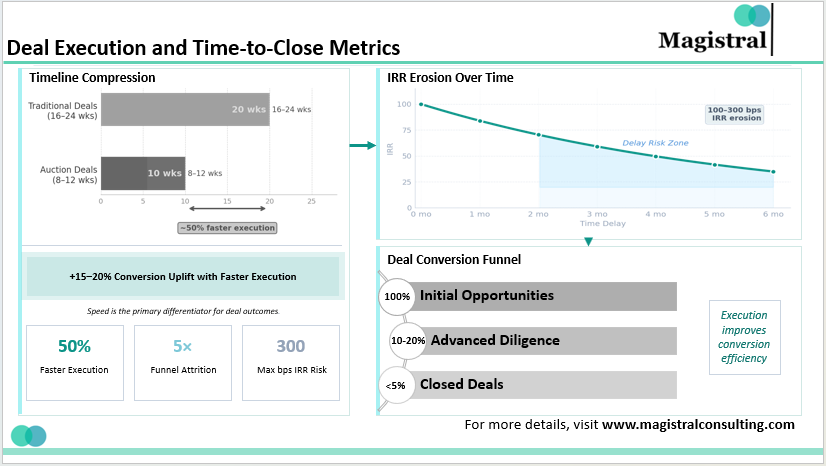
The implementation of the Deal Execution for Private Equity is a complex process. A high emphasis is required on strategy and knowledge of the markets. With the transforming global economy, the scene for private equity market has changed extensively. The increase in funds and the appetite for developed and developing markets has increased immensely, making deal execution strategies one key area of focus. This article discusses the existing trends, opportunities and difficulties around private equity deal making, with particular attention to the reality perspective across a range of countries and markets.

Private Equity services Deal execution assists since they provide the ancillary documents which is required during the preparation of the deal and negotiation stages.

Transaction Execution or Deal Execution for Private equity involves assessing the management, the industry, the history, the financials and forecasts, and conducting valuation analysis. After the sign-off by the investment committee to acquire the targeted company, the deal professionals submit an offer to the seller.

The Changing Landscape of Private Equity Deal Execution

Private equity deal making process consists of finding, structuring, negotiating, and financing of the investment into privately held companies primarily to enhance performance, expand activities or prepare them for exit. Various factors have influenced this market in the recent past, including:

The Changing Landscape of Private Equity Deal Execution

The Changing Landscape of Private Equity Deal Execution

Globalization

Investors start to look for different markets outside the developed markets, thus private equity firms are also shifting their attention beyond developed regions like Asia pacific, Africa and South America.

Technical Development

It became possible because of new technologies that enabled data analytics, AI and machine learning for firms, allowing them to better make various decisions including during the deal makings.

Availability of capital

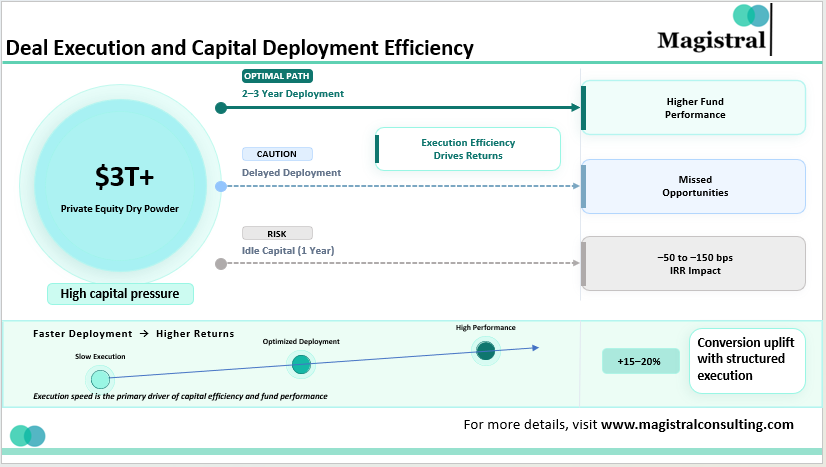
In private equity industry, capital deals in recent years have exceeded record figures, leading to fierce competition for strong assets. As a result, such turn of events has increased the volume of deal execution and the prices of valuation as well.

ESG Considerations

As a collateral issue there is an increased attention on sustainable and responsible investing, making it critical for PE firms to embed ESG factors into their deal execution processes.

Global Private Equity Deal Execution Trends and Data Insights

The global private equity ecosystem is shaped by a multitude of economic, political as well as financial dynamics. The following sections will discuss some of the peculiar trends in deal making in various regions.

Deal Execution for Private Equity -Trends and Data Insights

Deal Execution for Private Equity -Trends and Data Insights

North America: Dominance and Diversification

With strong economic mechanics, robust technological development, and more investment offers, North America continues to be the biggest Private Equity market auctions. But there is increased competition, and firms have started broadening their bases to include growth equity, sector-specific funds, distress purchases among others.

Volume of Private Equity Transactions

The trend appears to be steady; North America, as always, with a pickup in activity in the healthcare, technology, and renewable energy markets. The pattern of digital change and healthcare development has created great deal-making activity in this region.

Deal Volume

The number of private equity deals in North America has increased by approximately 6% since 2023.

Deal Value

The total value of private equity deals in North America is projected to reach $594 billion in 2024, with an average deal size of $134.80 million.

Europe: Stage of the Market and Growth Considerations

Buyouts have traditionally dominated private equity deals in Europe in well-entrenched markets and regulations. However, the deal flows have increasingly been targeted on investments that foster technological innovations and sustainability for new sources of growth.

Private Equity Deal Volume

Europe covered about 30% of the global private equity space in 2023. Most active sectors were in fintech, renewable energy and consumer products.

Data Trend

The average deal size in Europe’s middle market at the end of 2023 stands at around €51 million, or about $55 million. Growth in this segment is keeping pace with an increase in the number of mid-market deals.

Asia-Pacific Takes Lead on Startup Deals

The Asia-Pacific region is now leading new deal activity, driven by a very high volume of private equity buyouts. India, China, Japan are some markets.

Private Equity Deal Volume

Private equity deal execution volume in APAC in 2023 was more than 15% of the total global deals.

Data Trend (2022)

The deal volume in APAC in 2022 was much higher than that in 2021. It was about 8% higher. However, the average deal size was more or less $150 million, which reflects a trend toward smaller deals because of economic uncertainties and tighter credit conditions.

Emerging Business Models

The region witnessed an increase in new venture capital deals and early-stage financing rounds, especially by tech companies, that strengthen the competitive edge of APAC.

Latin America: Challenging but The Opportunities Mining Is Attractive

Latin America is a relatively underdeveloped market for private equity, but their emerging markets are shaping up to be ideal for growth due to their growth potential, wealth of resources, and expanded middle class.

Private Equity Deal Volume 2023

Latin America accounted for about 5% of the global private equity deal volume. That region is increasingly attracting investments, particularly in sectors like agribusiness, fintech, and natural resources.

Data Trend

Despite political instability and currency exchange rate changes, the private equity market in Latin America proved resilient as it grew by about 4% in 2023.

Key drivers of success in Deal Execution

Many factors influence the success of private equity deal execution across markets:

Data and Technology Integration

More and more private equity firms are employing data analytics and AI in their decision-making throughout the entire deal lifecycle. These analyses of large volumes of data will help in unearthing hidden opportunities, in forecasting market trends, and in optimizing deal structures.

Example: Deal execution tools powered by AI are helping firms make faster, more accurate judgments about potential investments, closing deals in less time.

ESG considerations

Companies have found it beneficial to integrate ESG considerations into their private equity sourcing and deal execution strategies. The high ESG performance of companies meets stakeholder expectations, reduces risks, and enables long-term value realization.  By the year 2023, it was anticipated that over 50 percent of private equity partnerships had incorporated ESGs in the assessment-deal process with most focus remaining on green technology and renewable energy.

Example: Probably anything in excess of 50 percent of private equity partnerships would have criteria already assessed regarding ESG considerations, with renewable energy and green technology occupying critical central positions across 2023.

International Transactions

Execution of supply international transactions among organizations is becoming increasingly commonplace.  This situation is mostly characterized by dealing with several regulations, cultural variations, and different financial structures existing in every particular count There will be an incentive for the above when there is access to new markets or diversification of portfolios.

Example: According to Global Data, the North American companies completed more than 35 percent of cross-border transactions in 2023 while Asia-Pacific and Europe emerged as outbound investment destinations.

Magistral’s Services for Deal Execution for Private Equity

Magistral provides a full cycle work on private equity deals. We support the clients at all stages, delivering value and preventing risks. Professional services connected with deal execution comprise the following:

Deal Sourcing & Target Identification

We use our market knowledge and networks to identify and evaluate high-potential acquisition targets. This ensures alignment with your strategic investment goals.

Due Diligence

This process points to the major risks, opportunities, and shortcomings where the client firm needs an improvement

Transaction Structuring

We structure tax-efficient transactions that meet financing needs, distribute risk effectively, and align with your long-term strategic goals.

Valuation and Pricing Advice

We guide the pricing strategy through methodologies like DCF, Comparative Company Analysis, and Precedent Transaction Analysis. This ensures that value is captured in the deal.

Risk Management & Mitigation

We recognize potential risks, financial, operational, and legal and develop custom-made policies. This helps certify a smooth transaction and reducing post-deal surprises.

Funding & Capital Raise

We involve our teams with the investors and lenders. And come up with the suitable composition of the debt and equity financing to close the deal.

Post-Deal Integration

We help in the post-acquisition integration in terms of financial systems, operations as well as culture. This helps and leverages synergies and eases off the transition of the target into the acquiring company’s framework.

Exit Strategy Development

We work jointly with the client. And define the most optimal exit strategy development which can take form of a sale or an IPO. And even recapitalization as and when the situation calls for it – this ensures the maximization of ROI.


About Magistral Consulting

Magistral Consulting has helped multiple funds and companies in outsourcing operations activities. It has service offerings for Private Equity, Venture Capital, Family Offices, Investment Banks, Asset Managers, Hedge Funds, Financial Consultants, Real Estate, REITs, RE funds, Corporates, and Portfolio companies. Its functional expertise is around Deal origination, Deal Execution, Due Diligence, Financial Modelling, Portfolio Management, and Equity Research

For setting up an appointment with a Magistral representative visit www.magistralconsulting.com/contact

About the Author

The article is Authored by the Marketing Department of Magistral Consulting. For any business inquiries, you could reach out to prabhash.choudhary@magistralconsulting.com

Private equity funds invest into sustainable energy and eco-friendly tech with a good eye towards ESG considerations fitting within strategy.

With companies seeking new geographical areas and with the need of diversification, cross border transactions are becoming more prevalent.

This, combined with increased capital availability, has heightened competition for quality assets-their deal volumes and valuations rise in consequence.

Privatization companies have been thrown into Asia-Pacific, African, and South America amid globalizations.

Introduction

Investment in real estate involves a classic way of building a diversified portfolio, a hedge against inflation, and a fairly steady source of income. Property investment is a foundation investment for any, but major private equity firms are the most sophisticated real estate investors, signifying its importance that conscientious decision-making is required. The article unveils the consequences of making such an irreversible investment decision and the level of concentration applied for selection.

Prime Investment Areas of Private Equity Firms

In the province of real estate, the degree of ownership in investment plays a vital role. The levy of acquisition depends on the extent of authority. The extension of authority broadly covers:

High Return Investment Property for Private Equity

High Return Investment Property for Private Equity

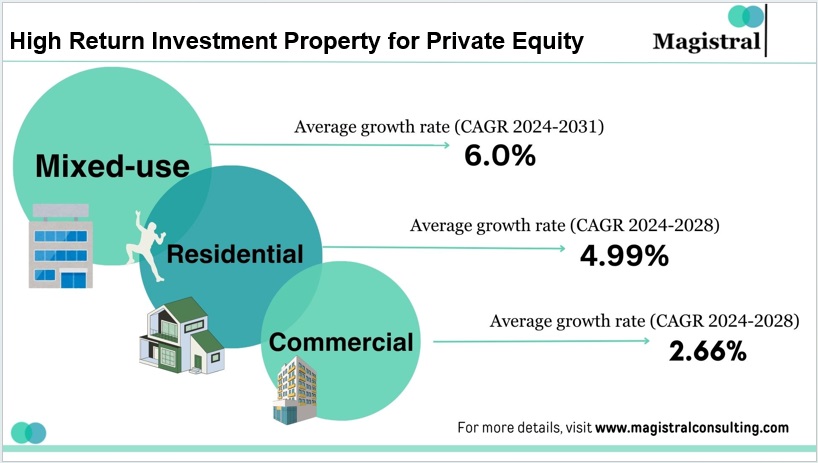
Commercial Property

A high-deposit non-residential property is invested for an official purpose. The anatomy of investment in these requires adequate savings, profits, and security. Commercial real estate is a long-term game that allows firms to ride economic waves. However, the post-pandemic picture unfolds an ousting reality of private equity firms and venture capital investment in commercial real estate as it faces a sharp decline from an investment of $37 billion in 2023 compared to $52.08 billion in 2021. As the world is getting back to normal, notwithstanding the unfortunate period faced, commercial real estate is all set for revival

Residential Property

The eternal need for a home has made the residential property traditional, stable, and consistent in demand. The synonym of stability serves its investors as a sense of security making them less susceptible to market fluctuations. The rise in central bank interest rates to fight back surging inflation has shown a noteworthy impact on economic activities, which weakened the demand for self-owned houses. Even the strongest economies around the globe are refusing to show a surge. Although during the pandemic the buyers paid top dollar for these residential properties now even the potential buyers continue to face a bidding war. Considering all the residential properties continue to be an attractive asset class for investors the normalization of interest rates will rewind time.

Mix-used Property

In the era of innovation, the areas of investments got upcycled. Innovation brings in new and investments are no exception to it. Mix-use properties are a combination of both commercial and residential under the same roof. Referring to the surging opportunities, mixed-use is the next phase of the mall’s natural evolution to a more viable and sustainable investment. An analysis by JLL revealed insights about the U.S. mall redevelopment program that 70 out of 153 are mixed-use projects that incorporate at least three different useful properties. Major areas for such investments are California, Texas, and Florida with the fastest-growing populations.

The major driving force for such evolution is the redundancy of the retail market as it seems impossible to visualize a pure-play retail mall full. As investment in properties has become a point of convenience over a point of location, investment in mixed-use properties is a billowing opportunity for private equity firms, and by tapping the same investors, they can make their pockets deep. There are two common types of this multi-parting structure:

Horizontal Mixed-Use Development

The redevelopment of the former Landmark Mall property in Alexandria now known as West End Alexandria is a definitive explanation of the horizontal mixed-use structure with roughly 4 acres of publicly accessible parks and open space and the 11-acre hospital campus which counted for a great moment for private equity firms. In the pipeline, currently, Hudson Yards in the U.S. is an ongoing real estate project that is catching the eyes of investors and will be an illustrious opportunity.

Vertical Mixed-Use Development

Located along Manhattan’s East River, the Freedom Plaza created history by introducing a single project with a multi-purpose floor-wise division each dedicated to a particular area, the building behaved as a model of blazing investment. Projects like these are designed for those with high ambitions and who prefer a close connection within the periphery, with only one space dedicated to public accessibility.

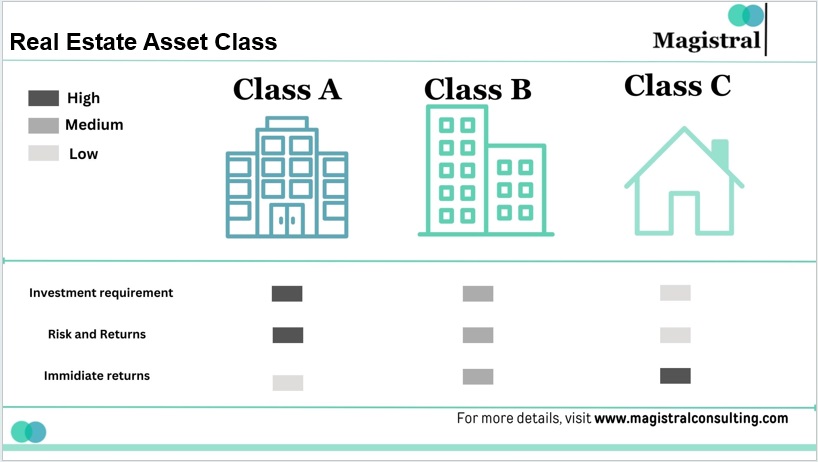
Further, these properties are classified into classes based on the combination of physical, geographical, and demographic characteristics. They can be classified into three classes:

Real Estate Asset Class

Real Estate Asset Class

Class A

Professionally managed, properties with high-income earning tenants with low vacancy rates. It’s the finest choice a private equity firms can have with high investment and low or no maintenance cost. Popular geographies like California U.S., including areas like San Francisco, San Diego, Los Angeles, Santa Barbara, and Silicon Valley embody significant opportunities for investors.

Class B

A step down in investment cost with hot demand and higher risk. Its class is comparatively low, but it manages to provide handsome returns to investors. A lucrative option for investors with a value-added strategy. The returns are based on the condition of the property.

Class C

Sits on the opposite end of the spectrum from Class A. Functional space with substantial refurbishment requirements can be an exemplary option for investors with tight pockets. Although, these are popular for their immediate returns and also present an opportunity to purchase, renovate and flip.

The decisions of the private equity firms are broadly based on three main factors which are investment requirement, risk and return, and immediate returns.

Magistral’s services for Private Equity Firms

We offer outsourcing services by bringing deep industry knowledge, market insights, and best practices in terms of offshore capabilities and capacities to help global Private Equity Firms tide through resource constraints without breaking the banks. Here are our service offerings:

Deal Sourcing

A pathway through which financial groups find various investable worthy deals to keep an uninterrupted deal flow.

Target Evaluation

It is an approach that aims to identify and secure high-quality targets with substantial development potential.

Financial Modelling

An efficient presentation of numerical data of a company’s operations in the past, present, and future.

Due Diligence

An integrated investigation and verification followed by companies to avoid any potential conflicts.

Data Room Management

Management of a data room which contains legally sensitive documents and files (usually related to merger and acquisition).

Portfolio Monitoring

Involves tracking and analyzing the performance of the portfolio.

Deal Execution

The final word of contract for merger and acquisition.

Exit Support

A walk-off strategy for unproductive parts of the business. 

With our specialized finance team, we serve not only a theoretical model but also prepare an all-encompassing platform to accommodate all available quantitative and qualitative inputs from multiple stakeholders.

We render an offshore team that acts as an extended team with highly flexible hours of service in different time zones, an AI-led solution for data protection, and all project iterations are completed without any additional cost making the whole experience cost-effective.

We provide services related to hedging such as GP profiling, GP due diligence, and GP list generation and discussion facilitation which helps our clients gain a competitive edge in the market.

About Magistral Consulting

Magistral Consulting has helped multiple funds and companies in outsourcing operations activities. It has service offerings for Private Equity, Venture Capital, Family Offices, Investment Banks, Asset Managers, Hedge Funds, Financial Consultants, Real Estate, REITs, RE funds, Corporates, and Portfolio companies. Its functional expertise is around Deal origination, Deal Execution, Due Diligence, Financial Modelling, Portfolio Management, and Equity Research

For setting up an appointment with a Magistral representative visit www.magistralconsulting.com/contact

About the Author

The article is authored by the Marketing Department of Magistral Consulting. For any business inquiries, you can reach out to prabhash.choudhary@magistralconsulting.com

Private Equity Trends: A Driving Force in Global Finance

Private equity is a powerful force shaping investment strategies, fostering innovation, and influencing economic landscapes. As we move into Q1 2024, it is essential to analyze current trends, challenges, and opportunities in the private equity space.

The Resilience of Private Equity Trends Amidst Global Uncertainty

Private equity continues to demonstrate remarkable resilience despite economic and geopolitical uncertainties. This strength stems from key strategies that help firms navigate market volatility and sustain growth.

Diversification Strategies

Private equity firms are actively pursuing diversification strategies to spread investment risks. By expanding across industries and regions, they mitigate sector-specific downturns and geographic vulnerabilities.

For instance, while hospitality and retail may face economic challenges, healthcare, technology, and renewable energy offer stability and long-term growth. Additionally, geographical diversification enables firms to tap into emerging markets while hedging against risks in established economies. Expanding into Asia, Latin America, and Africa offsets slow growth in mature markets.

Flexibility in Deal Structures

To navigate market uncertainties, private equity investors are embracing flexible deal structures. They are shifting away from traditional approaches and adopting innovative investment models.

Minority investments allow firms to acquire strategic stakes in companies without full control. This provides flexibility in resource allocation and exit planning. Convertible securities, such as preferred stock and bonds, offer downside protection while allowing participation in potential upside gains. Structured exits, including recapitalizations, secondary buyouts, and IPOs, optimize investor returns under favorable conditions.

Focus on Operational Value Creation

Operational excellence is becoming a top priority for private equity firms. By working closely with management teams, investors aim to improve efficiency, reduce costs, and accelerate revenue growth.

Operational value creation initiatives encompass a wide range of strategies, including:

Streamlining Operations

Private equity firms collaborate with portfolio companies to identify inefficiencies, streamline business processes, and eliminate redundant costs, enhancing operational agility and responsiveness.

Implementing Growth Strategies

Private equity investors work closely with management teams to develop and execute growth strategies, including market expansion, product diversification, and strategic acquisitions, to capitalize on emerging opportunities and drive top-line growth.

Enhancing Organizational Capabilities

Private equity firms invest in talent development, leadership training, and organizational restructuring to strengthen management teams, foster innovation, and build sustainable competitive advantages within portfolio companies.

Technology and Innovation: Catalysts for Private Equity Growth

Technological advancements are reshaping private equity investment strategies. Investors are increasingly focusing on innovative ventures, particularly in fintech, AI, and cybersecurity.

Technology and Innovation in Private Equity

Technology and Innovation in Private Equity

Emphasis on Digital Transformation

Private equity firms are actively seeking companies that drive digital transformation. Investments in cloud computing, cybersecurity, and e-commerce are growing rapidly. The demand for digital solutions that enhance customer experience, optimize workflows, and improve operational efficiency is rising.

Firms are also investing in cybersecurity startups to combat rising cyber threats. These companies provide advanced threat detection, data protection, and risk mitigation solutions for businesses.

Investment in Industry-specific Solutions

Private equity investors are not only diversifying their portfolios across industries but also targeting companies offering industry-specific solutions to capitalize on niche market opportunities. In Private Equity Trends, healthcare technology emerges as a prominent investment area, with private equity firms investing in companies that develop innovative medical devices, healthcare IT solutions, telemedicine platforms, and digital health services. The convergence of healthcare and technology presents lucrative opportunities for private equity investors to drive innovation, improve patient outcomes, and optimize healthcare delivery systems.

Renewable energy also garners significant attention from private equity investors, with firms targeting companies involved in solar energy, wind power, hydroelectricity, and other renewable energy sources. Private equity trend for investment in renewable energy projects and sustainable infrastructure initiatives reflects a broader commitment towards addressing climate change, reducing carbon emissions, and promoting environmental sustainability.

Strategic Partnerships and Acquisitions

To stay competitive, private equity firms are forming alliances with technology companies, research institutions, and industry experts. These collaborations facilitate knowledge sharing and accelerate innovation.

ESG Integration: A Paradigm Shift in Private Equity

Environmental, Social, and Governance (ESG) considerations have emerged as pivotal factors shaping investment strategies across industries. In Private equity trends for Q1 2024, firms are actively integrating ESG principles into their decision-making processes, aligning investments with sustainability goals. This paradigm shift underscores a broader commitment towards responsible investing, resonating with stakeholders and driving long-term value creation.

Key initiatives driving ESG integration in private equity include:

ESG Integration in Private Equity

ESG Integration in Private Equity

ESG Due Diligence

Private equity firms are conducting comprehensive ESG due diligence to assess environmental risks, social impact, and governance practices within target companies. Private equity trends entail evaluating factors such as carbon footprint, resource usage, labor practices, diversity and inclusion policies, and board governance structures. Through rigorous ESG due diligence, private equity investors can identify potential risks and opportunities, inform investment decisions, and enhance value creation initiatives.

Impact Investing

Private equity investors are increasingly allocating capital towards impact investing opportunities that generate positive social and environmental outcomes alongside financial returns. The impact investments may focus on areas such as renewable energy, affordable housing, healthcare access, education, and community development. By aligning investment strategies with the United Nations Sustainable Development Goals (SDGs) and other global sustainability frameworks, private equity firms contribute to addressing pressing societal and environmental challenges while generating competitive financial returns.

Stakeholder Engagement

Private equity firms are engaging with stakeholders, including investors, portfolio companies, employees, customers, regulators, and local communities, to promote transparency, accountability, and sustainable business practices. For private equity trends, stakeholder engagement initiatives may include regular ESG reporting, dialogue sessions, sustainability workshops, and collaborative projects. By fostering open communication and collaboration, private equity investors can build trust, mitigate risks, and unlock new opportunities for value creation in alignment with ESG principles.

Long-term Value Creation

ESG integration in private equity extends beyond compliance and risk management to drive long-term value creation for investors and society at large. Private equity firms are implementing ESG-focused value creation initiatives within their portfolio companies, such as energy efficiency improvements, supply chain optimizations, product innovation for sustainability, and responsible corporate governance practices. By embedding ESG considerations into business strategies and operations, private equity investors enhance resilience, reputation, and competitive positioning, ultimately driving sustainable growth and financial performance over the long term.

Geopolitical Dynamics: Navigating Challenges in Private Equity

The geopolitical landscape casts a shadow of uncertainty over private equity markets, influencing investment sentiments and risk perceptions. Private equity trends have been characterized by geopolitical tensions, trade disputes, and regulatory changes pose significant challenges for private equity firms operating on a global scale. The ability to navigate through geopolitical complexities while seizing lucrative opportunities remains a defining factor for success in the private equity arena.

Key considerations for navigating geopolitical challenges in private equity include:

Regulatory Compliance

Private equity firms must stay abreast of evolving regulatory frameworks and geopolitical developments to ensure compliance with local laws and regulations governing cross-border investments.

Risk Management Strategies

Private equity investors are implementing robust risk management strategies, including scenario planning, hedging techniques, and portfolio diversification, to mitigate geopolitical risks and safeguard investment portfolios.

Strategic Partnerships and Alliances

Private equity firms are forming strategic partnerships and alliances with local investors, industry experts, and government agencies to navigate geopolitical uncertainties and capitalize on emerging market opportunities.

The Rise of Emerging Markets: Exploring New Frontiers in Private Equity

As traditional markets reach saturation points, private equity investors are increasingly turning towards emerging economies in search of high-growth opportunities. Private equity trends witness a surge in private equity activity across regions like Southeast Asia, Latin America, and Africa, fueled by demographic shifts, urbanization, and burgeoning middle-class populations. The allure of untapped markets coupled with favorable regulatory environments positions emerging economies as key drivers of private equity growth.

Key trends driving private equity investments in emerging markets include:

Sector-specific Opportunities

Private equity investors are targeting emerging market sectors poised for rapid growth, including consumer goods, healthcare, infrastructure, and technology, leveraging demographic trends and consumer preferences to drive value creation.

Strategic Partnerships and Local Expertise

Private equity firms are partnering with local investors, entrepreneurs, and industry experts to navigate cultural nuances, regulatory challenges, and market dynamics unique to emerging economies, facilitating deal sourcing, execution, and value realization.

Sustainable Development Goals

Private equity investors are aligning their investment strategies with sustainable development goals (SDGs), focusing on investments that promote economic growth, social inclusion, and environmental sustainability in emerging markets, thereby contributing to positive socio-economic impact and long-term value creation.

About Magistral Consulting

Magistral Consulting has helped multiple funds and companies in outsourcing operations activities. It has service offerings for Private Equity, Venture Capital, Family Offices, Investment Banks, Asset Managers, Hedge Funds, Financial Consultants, Real Estate, REITs, RE funds, Corporates, and Portfolio companies. Its functional expertise is around Deal origination, Deal Execution, Due Diligence, Financial Modelling, Portfolio Management, and Equity Research

For setting up an appointment with a Magistral representative visit www.magistralconsulting.com/contact

About the Author

The article is authored by the Marketing Department of Magistral Consulting. For any business inquiries, you can reach out to prabhash.choudhary@magistralconsulting.com

Introduction

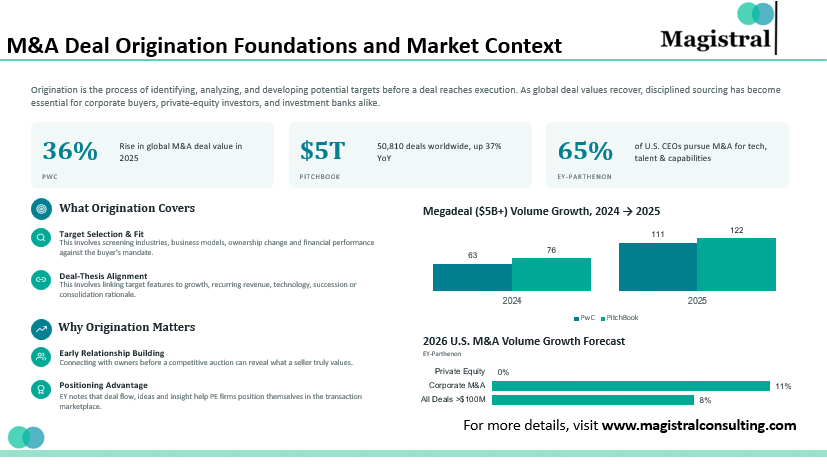
Deal origination for Private Equity or Deal sourcing is the process by which investment firms identify opportunities. Larger volume deals are sourced to maintain a viable deal flow. Building a deal flow is the most important step because making good investment decisions is reliant on seeing many deals and selecting the best among them to pursue.

The effectiveness of the deal origination process ensures a healthy portfolio of investments that further ensures healthy returns to the Limited Partner investors. Hence its business-critical for a Private Equity firm to make sure the deal origination process works, and works well to meet the investment objectives.

Some venture capitalists, private equity investors, and investment bankers use various methods to source deals whereas some firms reach out to a team of specialists to help with the process of deal origination via outsourcing.

Deal Origination Process for Private Equity

There are multiple approaches to Deal Origination for Private Equity Firms. Some of them are

Traditional Outbound Approach

Here, the deal origination and sourcing largely depend on a wide area of personal networks, contacts, and the good reputation of the firm. Having knowledge of specific industries and the idea of similar deals taking place in the market is an added advantage for placing bids. This approach becomes successful only on the firm’s broad network of contacts, referrals, and a good reputation among founders. Firms compete against each other in process of bidding and their success depends on gaining specific industry knowledge. This typically leads to overvalued assets as all VCs and PEs are looking at the same deals.

Pros of outbound deals:

  • No matter how much things have changed but still the fundamentals of sales remain the same as they are based on human nature. And that makes outbound deals still very successful
  • It’s predictable and gives immediate results on the outbound process as it involves getting instant feedback from the prospective targets

Inbound deals

Inbound deal sourcing refers to all incoming leads, whether they come from existing relationships or unknown founders seeking investment. This is when a founder approaches the firm due to networking, good reputation, or word of mouth about the firm.

Pros of inbound deals:

  • Owners and operators are more likely to meet when they share a connection with you already
  • A shared network gives more knowledge which helps in creating more personalized interactions, giving a competitive edge
  • These deals move comparatively faster as introductions are warm and made only when seeking investments

Outsourced Approach

Traditional methods are nowadays giving way to modern online dealing platforms. Several financial technology companies help in deal origination for private equity firms and enable them to go beyond their network of contacts and source deals by reaching a broad audience on the basis of various criteria. Firms outsource certain parts of the investing value chain to reduce operational costs while maintaining quality and effectiveness.

Pros of Outsourced Approach:

  • Cost-effective
  • It casts a wider net of reaching out to target companies, that ensures exclusive deals that may help a Private Equity firm in delivering outsized IRRs for its Limited Partner investors
  • The deal pipeline continues to be populated in spite of multiple demands like new deals from the top management of the firm
  • The SOP ensures standardized elimination of targets not suitable to PE’s investment philosophy
  • Netting in the assets that are fairly valued

Magistral’s Process of Deal Origination for Private Equity Firms

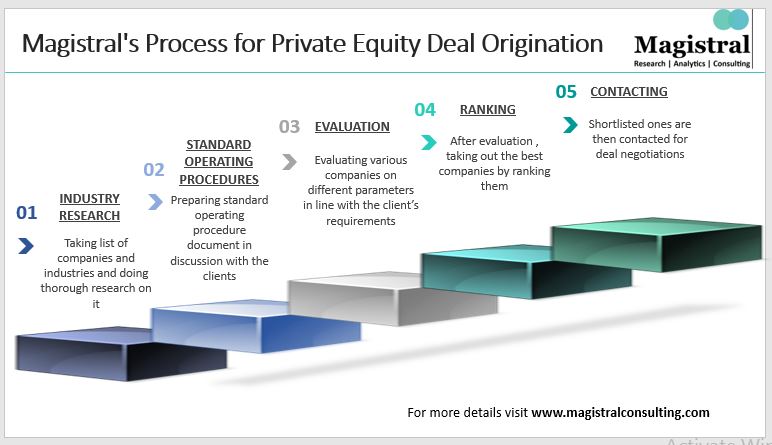
There are various steps involved in the deal origination of private equity firms. These steps include Industry Research, Making SOPs, Evaluating, Ranking, and Contacting the shortlisted companies.

Magistral's Private Equity Deal Origination Process

Deal Origination Process for Private Equity

Industry Research 

This step focuses on taking out a list of companies that looks fit in terms of market position, competitive advantages, multiple avenues of growth, stable and recurring cash flows, low capital requirements, strong management team, favorable industry trends, etc. The inputs from research feed into the next step of SOPs

SOPs

This step is considered majorly after discussion with the clients, standard operating procedures (SOPs) are prepared in order to take care of the requirement of Private Equity clients while performing deal origination and deal sourcing process. A formal signoff is taken from the client once all the steps in detail are identified. Magistral performs this step for its clients without any cost to them

Evaluation

Various criteria are looked into while evaluating a target. Some of these are related to investors such as the investor’s ability to fund, if multiple investments can be made, if the investor has an interest in lead investing, his level of portfolio diversification, etc. The major part of the evaluation of the target is to ensure it meets the investment philosophy of the investor and is in a position to generate value over the investment horizon. The factors like industry, sub-industry, niche, management, team, past fundraising, strategy, marketing, finances, etc are evaluated for targets.

Ranking

On the basis of the above research, the analysts rank the various targets which best align with the investment philosophy of the Private Equity firm. The targets are ranked as per the suitability

Contact

 The final shortlisted investors are then contacted via mail or calls in order to close the best possible deal for a private equity firm. All the support required during the negotiations is provided as well.

Magistral’s Private Equity Deal Origination/ Deal Sourcing Case Study

The client and the business situation

A leading private equity company, investing in a broad range of markets such as energy, retail, and technology. The client wanted to deploy the capital to meet up its investment strategies and therefore wanted Magistral to find the best deals for the company at good valuations.

Magistral's Private Equity Case Study

Magistral’s PE Deal Origination/ Deal Sourcing Case Study

Magistral’s solution 

  • Magistral appointed a dedicated manager for taking the existing list of potential target companies, populate it further, and review them carefully
  • The team created Standard Operating Procedures at no cost to the client, detailing the process thoroughly along with research and ranking methodology.
  • A team of analysts started evaluating and ranking targets on different parameters already set out in the SOP
  • The team contacted shortlisted companies via call or mail and then proceeded with the agreement, documentation, and deal negotiations.

Outcomes

  • Within 6 months, the firm was introduced to more than 30 opportunities.
  • The effort resulted in detailed due diligence with two transactions that were quickly closed

Typical Outcomes of Magistral’s Deal Origination Services for Private Equity

According to a recent survey, 88% of private equity investors indicate their most important 2021 objective is deploying capital- a nearly 10-point increase from last year.

While working with Magistral, IRR is improved due to an exhaustive scan of the investible universe. There is approximately a 30-50% reduction in operational costs for target screening. Database costs are justified through rationalized services.

Over the years, Magistral has delivered multiple analyses that go into supporting and facilitating million-dollar global transactions. The team has so far worked with 200+ clients and facilitated transactions worth billions of dollars.

About Magistral consulting

Magistral Consulting has helped multiple funds and companies in outsourcing operations activities. It has service offerings for Private Equity, Venture Capital, Family OfficesInvestment BanksAsset Managers, Hedge Funds, Financial Consultants, Real Estate, REITs, RE fundsCorporates and Portfolio companies. Its functional expertise is around Deal originationDeal Execution, Due Diligence, Financial ModelingPortfolio Management and Equity Research.

For setting up an appointment with a Magistral representative visit www.magistralconsulting.com/contact

About the Author

The article is authored by the Marketing Department of Magistral Consulting. For any business inquiries, you could reach out to  prabhash.choudhary@magistralconsulting.com